Let's talk about something most people don't think about until it's too late: what's happening beneath those gorgeous bathroom tiles.
You've spent hours choosing the perfect Metro tiles for your bathroom. You've budgeted for the installation. You're imagining yourself stepping into that luxury shower after a long day. But here's the thing — if your tiler skips proper waterproofing, you're essentially building a ticking time bomb.
This isn't scaremongering. In London, where we've got everything from Victorian terraces with timber floors to converted warehouse flats, professional waterproofing isn't just recommended — it's absolutely essential.
Why London Bathrooms Are Particularly Vulnerable
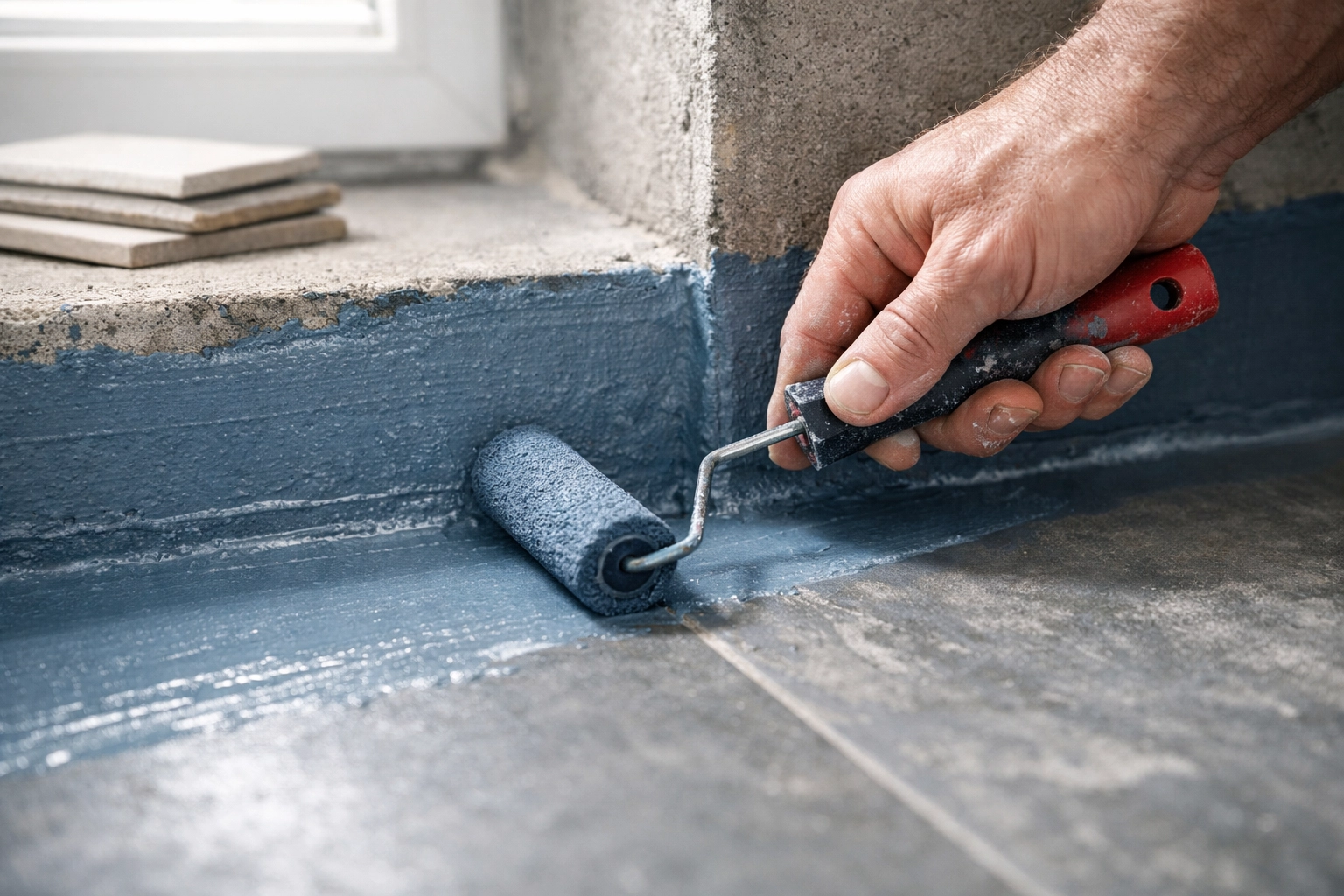
London's housing stock creates unique challenges that other cities simply don't face. If you live in a period property (and let's be honest, half of us do), chances are your bathroom sits on timber joists that are anywhere from 80 to 150 years old.
These beautiful old buildings weren't designed with modern power showers in mind. They certainly weren't built to handle rainfall showerheads delivering 15 litres per minute.
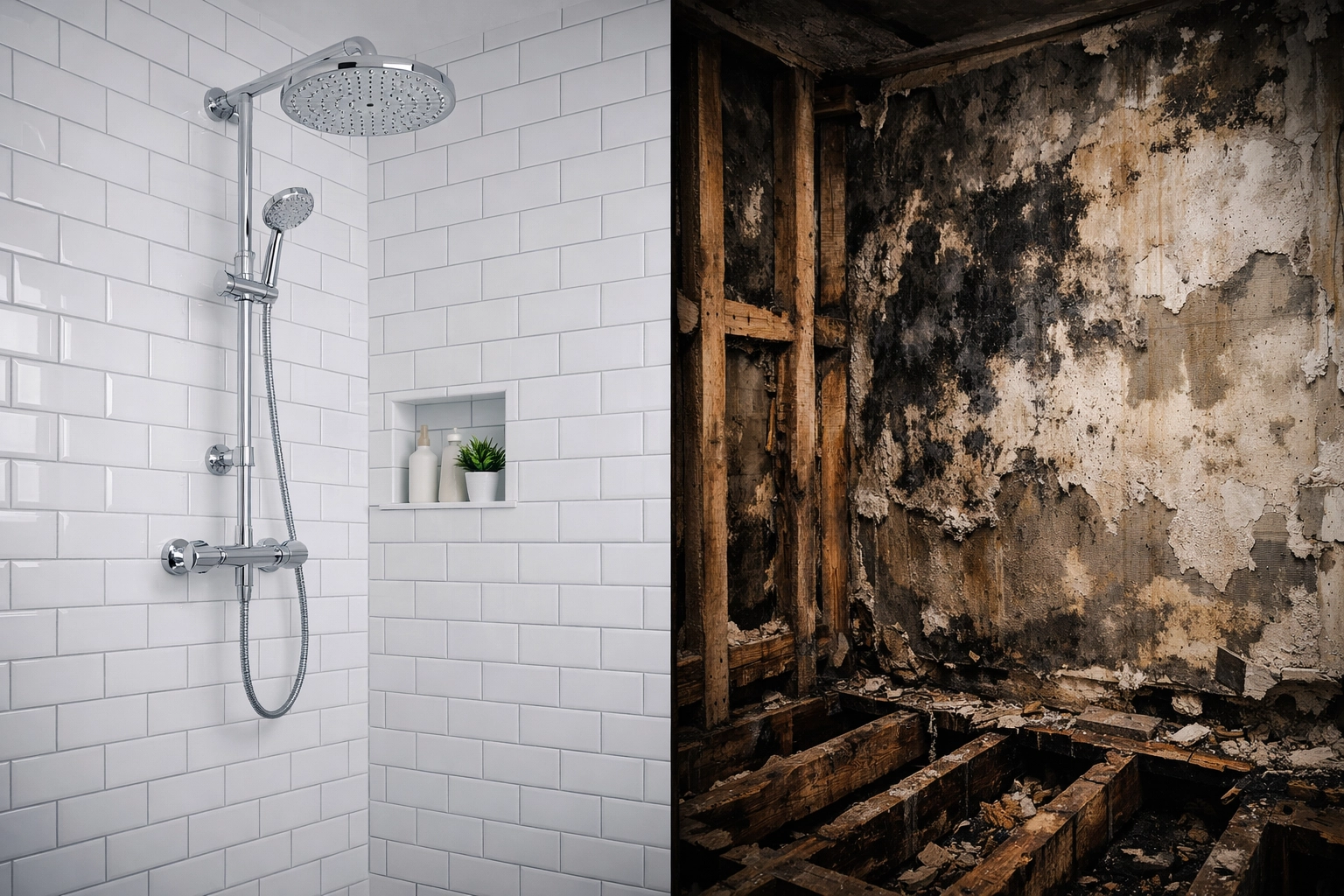
When water seeps through tiles and grout — and trust me, it will seep through — it doesn't just disappear. In a converted flat, that moisture can travel to the ceiling below. In a Victorian terrace, it rots the joists underneath. Either way, you're looking at structural damage that won't show itself until the damage is already catastrophic.
The problem is invisible until it isn't. One day you're fine, the next day your neighbour downstairs is calling about a mysterious damp patch on their ceiling. Or worse, you step on your bathroom floor and feel it give slightly beneath your feet.
The True Cost of Skipping Waterproofing
Here's what actually happens when bathroom tiling in London is done without proper waterproofing:
Everything looks perfect. Your tiles are gleaming. You're happy.
Water is silently penetrating the grout lines and tile edges. It's soaking into the substrate below. You notice nothing.
Moisture has now reached timber joists or plasterboard. Black mould starts growing behind the tiles. You might notice a musty smell, but you can't see the problem yet.
The damage reveals itself. Tiles start coming loose. Floor feels spongy. Ceiling stains appear below. You call someone out, and they deliver the bad news: the entire bathroom needs to be ripped out and redone. Properly this time.
A professional tiler in London will tell you straight: fixing water damage typically costs 3–5 times more than doing the waterproofing correctly in the first place. We're talking £8,000–15,000 for a full bathroom strip-out and rebuild, versus £1,200–2,000 for proper tanking during the original installation.
What Professional Waterproofing Actually Involves
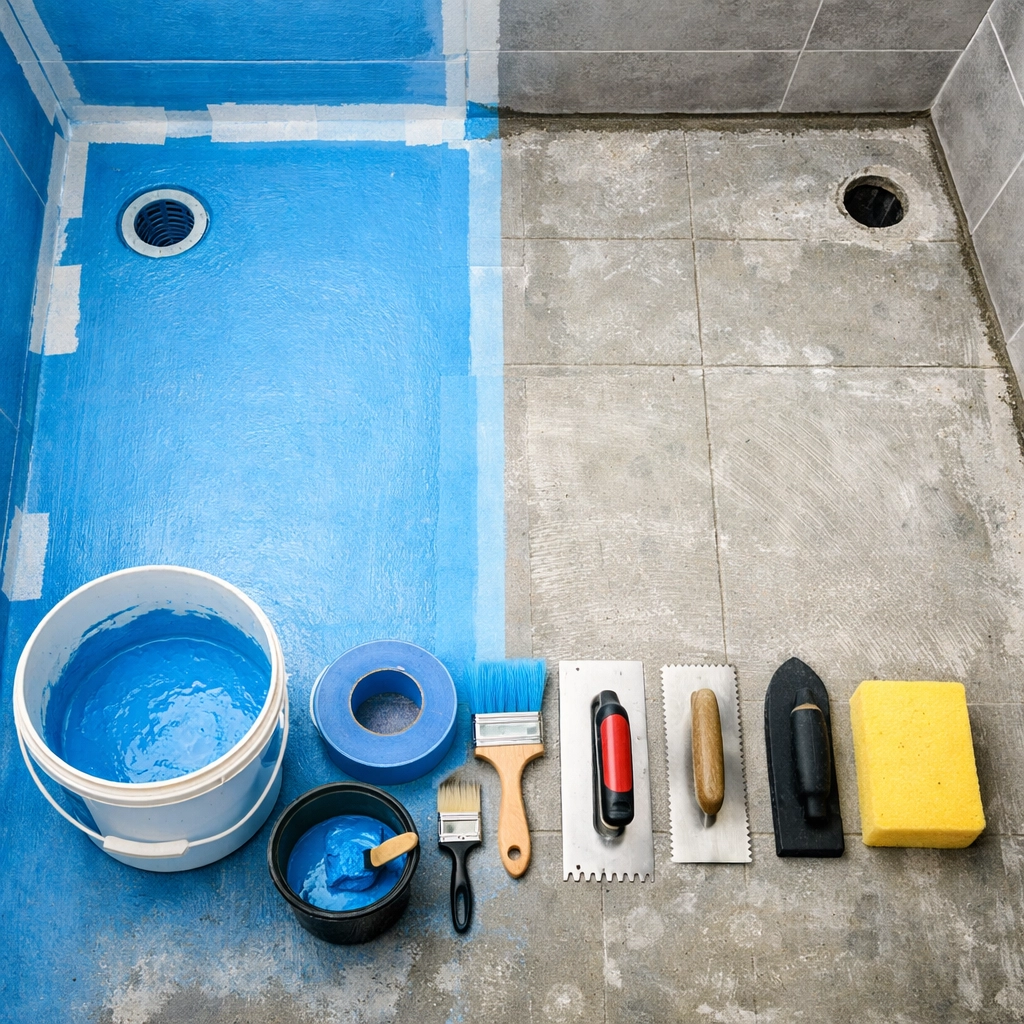
Professional bathroom waterproofing — often called "tanking" — creates an impermeable barrier between your tiles and the structure of your home. Here's what bathroom tilers in London should be doing:
Sub-Floor Preparation
Before a single tile goes down, the sub-floor needs assessing. Timber floors require moisture-resistant backer boards. Concrete floors need checking for cracks and leveling. Any movement in the substrate will eventually crack both the waterproofing and the tiles above it.
This is where corner-cutting happens most often. A proper sub-floor prep can add a day or two to the project timeline, so some installers skip it. Don't let them.
Tanking Application
Professional waterproofing involves applying multiple coats of liquid membrane or sheet membrane to create a watertight barrier. This isn't just slapping on some SBR primer and calling it waterproof.
Quality tanking covers:
- •The entire shower area floor
- •Shower walls up to at least 1.8 meters (and 300mm beyond the shower zone)
- •Around the bath, particularly at the floor-wall junction
- •Behind the sink area
- •Any areas where water could realistically splash
The membrane gets reinforced at corners and joints with special tape, because these are the most vulnerable spots for water ingress.
Critical Details: Movement Joints & Anti-Fracture Mats
Professional bathroom tilers understand that the devil is in the details. Floor-to-wall junctions get special attention with coved sealant. Pipe penetrations are carefully sealed. Shower tray edges are properly integrated with the tanking system.
Movement joints are installed at perimeter edges and at intervals across large tiled areas to accommodate the natural expansion and contraction of building materials. Without them, tiles crack — especially over underfloor heating systems where thermal movement is constant.
Anti-fracture mats (also called crack isolation membranes) are laid over vulnerable substrates — particularly concrete screeds prone to cracking — to prevent substrate movement from telegraphing through to the tile surface. This is specialist knowledge that separates experienced bathroom tilers from general tradespeople.
These details separate a bathroom that lasts 20+ years from one that fails in three.
Why DIY Waterproofing Fails (Even When You Follow Instructions)
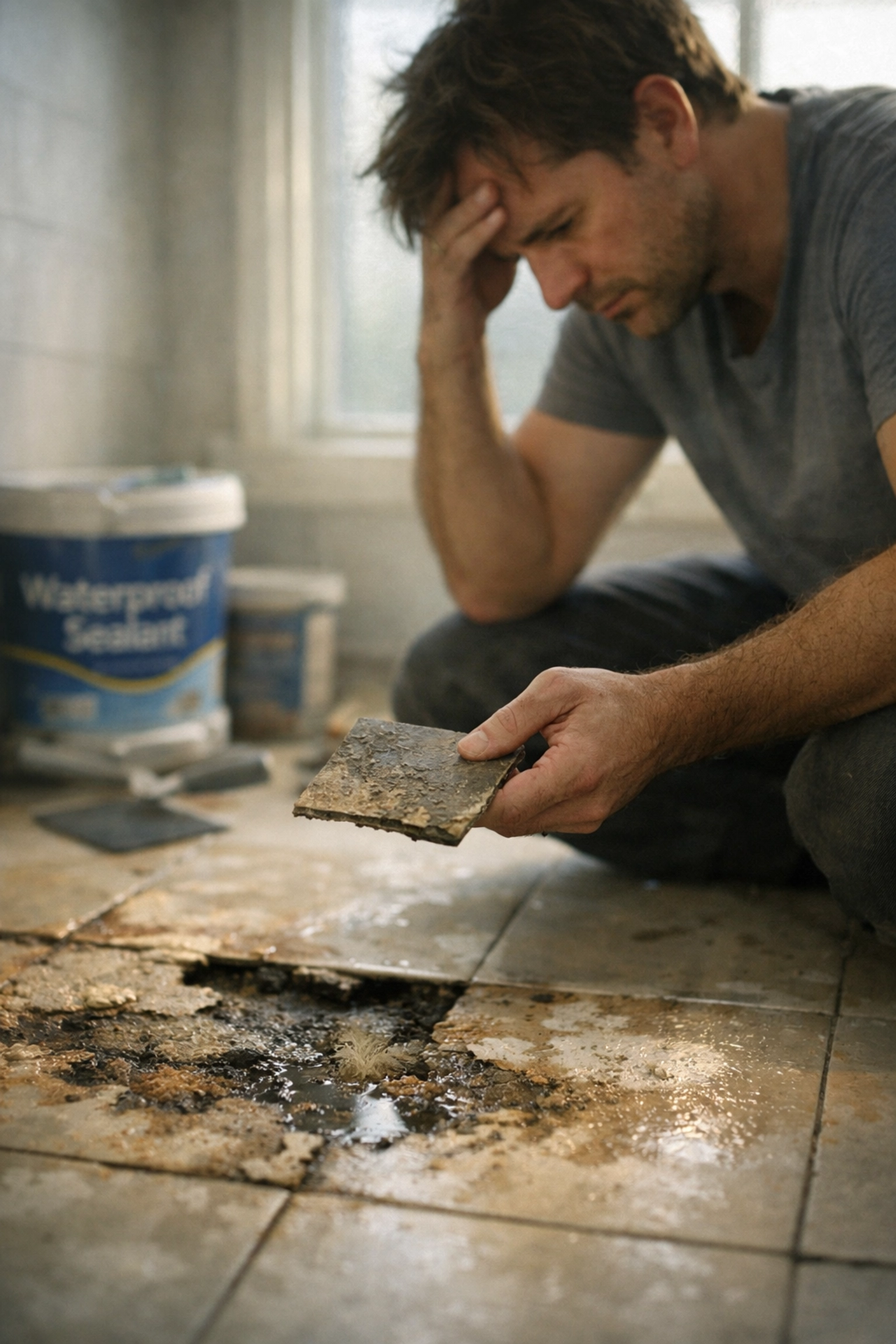
YouTube makes waterproofing look straightforward. Buy the kit, spread it on, job done. Except it's never that simple.
Professional bathroom tilers in London have seen every type of substrate, every configuration, every challenge. They know that the Victorian conversion flat in Hackney needs a completely different approach than the 1980s ex-council flat in Lambeth.
They understand that tanking membranes have specific application temperatures (good luck getting it right in a February bathroom). They know which primers work with which membranes. They've dealt with uneven floors, damp walls, and awkward corners hundreds of times before.
More importantly, professional tilers carry liability insurance. If the waterproofing fails, you're covered. If your DIY job fails, you're covering the entire cost of repairs yourself.
The Regulations You Need to Know About
Now recommends tanking for domestic bathrooms, not just commercial ones.
Requires protection against moisture in areas with frequent water use.
Mandates waterproofing for showers delivering more than 12 litres per minute.
What does this mean for you? If you're renovating a bathroom in London, proper waterproofing isn't optional anymore — it's expected standard practice.
2026 Luxury Bathroom Trends (That Still Need Waterproofing)
The irony? The most popular bathroom trends for 2026 make waterproofing even more critical.
Walk-in Wetrooms
Stunning but absolutely dependent on perfect waterproofing across the entire floor area.
Large-Format Porcelain
Fewer grout lines don't mean better waterproofing — the membrane underneath is what matters.
Natural Stone Tiles
Marble and limestone are porous. Without proper sealing and underlying waterproofing, they'll deteriorate quickly.
Underfloor Heating
UFH systems must sit above the waterproof membrane but below the adhesive. Getting this wrong means ripping up everything.
Why Professional Installation Saves You Money
Option A: Cut-Rate Job
No proper waterproofing
- Initial installation: £3,500
- Fails after 3 years
- Complete redo: £12,000
Total: £15,500+
Option B: Professional
With proper tanking
- Installation with tanking: £5,200
- Lasts 15–20 years
- Zero water damage
Total: £5,200
Beyond money, think about the disruption. A bathroom failure means no bathroom for 2–3 weeks during repairs, potential damage to rooms below, possible mould remediation costs, and countless headaches. Professional bathroom tiling in London with proper waterproofing means you do the job once, correctly, and forget about it for the next two decades.
What to Look for in a Professional Bathroom Tiler
Not all tilers are equal. Here's what separates the professionals from the cowboys:
- ✓They'll assess your specific substrate and recommend appropriate solutions
- ✓They'll explain exactly what waterproofing system they're using and why
- ✓They'll provide before-and-after photos of the tanking stage (crucial for your records)
- ✓They'll offer insurance-backed guarantees on the waterproofing
Most importantly, professional bathroom tilers won't rush the prep work. If someone quotes you a complete bathroom rip-out and re-tile in four days, they're cutting corners somewhere — and it's probably the waterproofing.
The Bottom Line
Your bathroom tiles are the visible part. The waterproofing beneath them is the invisible part that actually matters.
In London's challenging housing stock — from period conversions to modern apartments — professional waterproofing isn't a luxury. It's the foundation that everything else depends on.
Yes, hiring professional bathroom tilers in London costs more upfront. But compared to the alternative — ripping out a failed bathroom and starting over — it's the smartest money you'll ever spend.
Choose a tiler who treats waterproofing as non-negotiable. Your future self (and your downstairs neighbours) will thank you.
Don't Risk Your Bathroom Investment
Searching for reliable bathroom tilers in London? Our team specialises in professional waterproofing and precision tiling for wet rooms, luxury bathrooms, and period property renovations.
Contact us for a technical consultation — we'll assess your bathroom and provide a detailed waterproofing plan.