Walk up to any Victorian terrace in Kensington, Islington, or Clapham and look down. Chances are, beneath decades of dirt, paint splashes, and misguided carpet adhesive, there's a geometric tile floor that was laid over a century ago — and it's still structurally sound.
Victorian encaustic and geometric tiles are among the most durable flooring materials ever produced. They were engineered to withstand the footfall of entire households, servants included, for generations. The problem isn't the tiles themselves — it's what's been done to them since.
This guide covers everything you need to know about Victorian tile restoration in London: from identifying what you've got, to understanding the restoration process, to finding the right specialist to bring your hallway back to life.
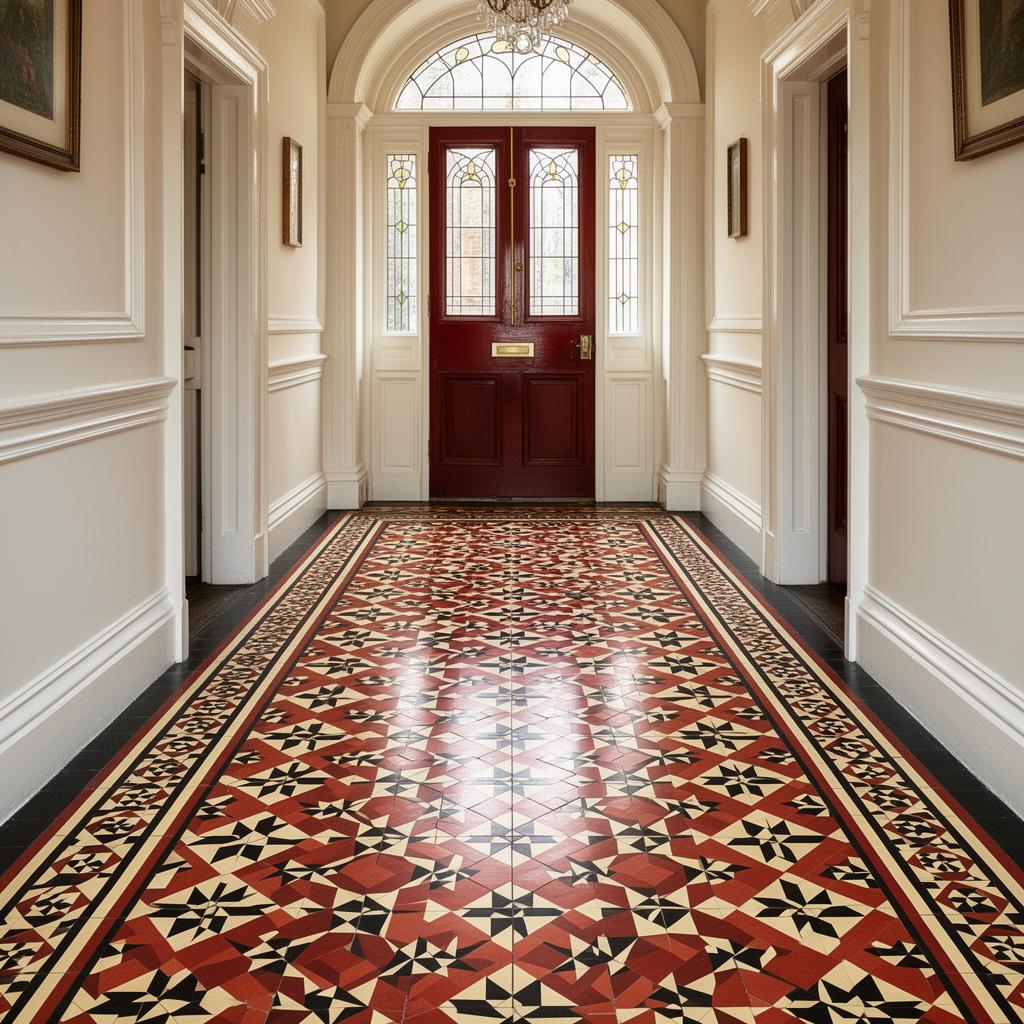
A Brief History of London's Victorian Hallway Tiles
The geometric tile floors that grace London's Victorian properties date primarily from 1840 to 1910. During this period, manufacturers like Minton, Maw & Co, and Godwin perfected the art of encaustic tile production — a technique where coloured clays are inlaid into the tile body rather than painted on top.
This wasn't decorative surface treatment. The colour runs through the entire depth of the tile, which is why these floors still show their original patterns after 150 years of use. It's also why they're worth restoring rather than replacing.
London was the epicentre of this tile revolution. The Great Exhibition of 1851 showcased Minton's encaustic tiles to the world, and within a decade, every self-respecting London townhouse had a geometric tile hallway. From the grand villas of Holland Park to the terraced streets of Hackney, these floors became as much a part of London's architectural identity as sash windows and stucco facades.
Understanding What You've Got: Types of Victorian Tiles
Before any restoration begins, you need to identify exactly what type of tiles you're working with. This determines the cleaning methods, repair approach, and replacement options.
Encaustic Tiles
The premium option. Coloured clay inlaid into the tile body, creating patterns that never wear away. Common in grander London properties — you'll find them in Kensington, Chelsea, and Belgravia townhouses.
Geometric Tiles
Single-colour tiles cut into shapes (triangles, hexagons, diamonds) and assembled into patterns. More common than encaustic, found across London's Victorian terraces from Brixton to Highgate.
Quarry Tiles
Plain, unglazed tiles typically in terracotta red or buff. Common in service areas, kitchens, and more modest properties. Incredibly hard-wearing but often hidden under layers of lino.
Glazed Border Tiles
Glossy, coloured tiles used as borders around geometric layouts. Often the first to suffer damage as they're positioned at the edges where foot traffic concentrates.
Common Damage: What Decades of Neglect Look Like
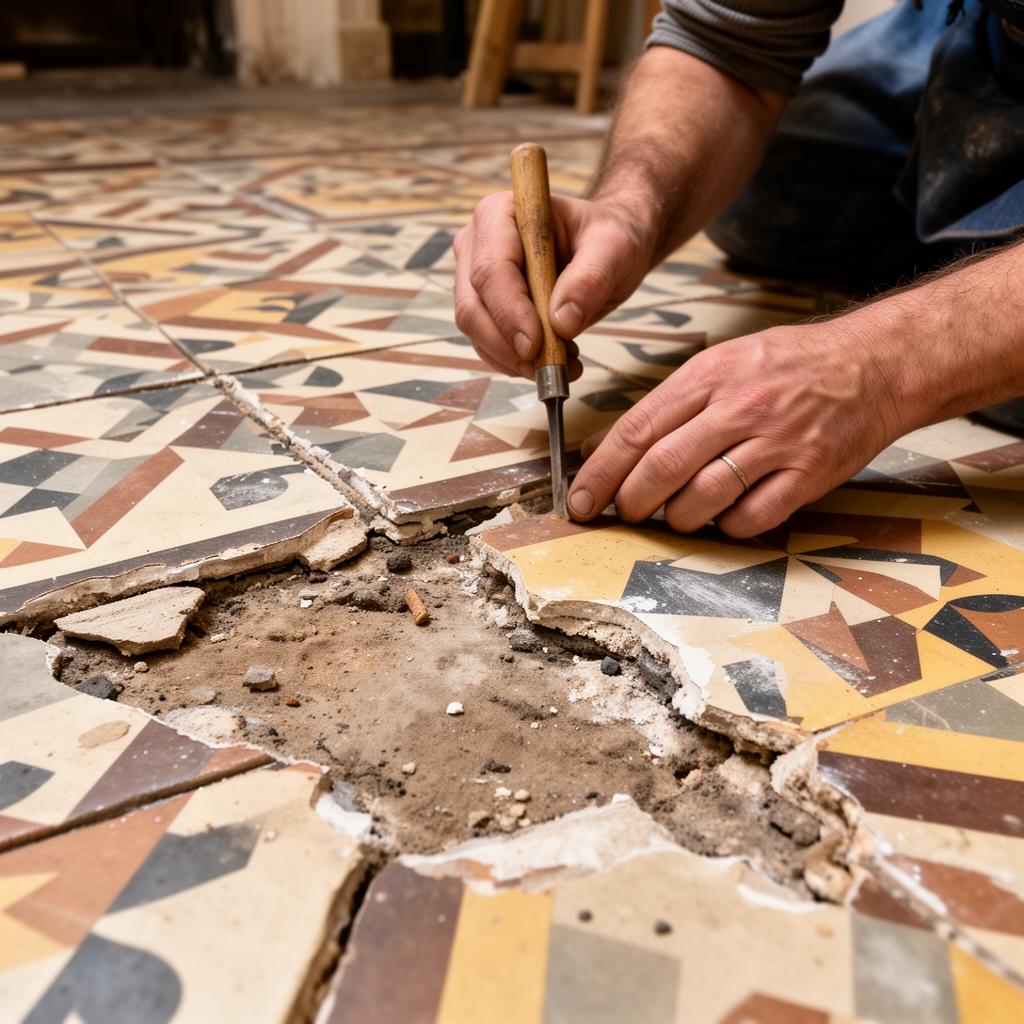
Most Victorian tile floors we encounter in London share similar problems. Understanding these helps you gauge the scope of restoration needed:
- •Carpet adhesive residue— The most common issue. 1970s carpet adhesive bonds aggressively to tile surfaces and requires specialist solvents and careful mechanical removal.
- •Cracked and missing tiles— Usually concentrated around doorways and high-traffic areas. Individual tiles can be replaced if matching ones are sourced.
- •Paint and varnish layers— Previous owners painted over tiles (a crime, frankly). Multiple layers need careful stripping without damaging the original surface.
- •Rising damp staining— London's clay soil and older damp-proof courses mean mineral deposits often discolour tiles, particularly near external walls.
- •Sub-floor movement— Settlement over 100+ years causes cracking. The tiles themselves may be fine, but the mortar bed beneath has shifted.
- •Worn surfaces— High-traffic zones, especially the 'desire line' from front door to staircase, show surface wear. Encaustic tiles handle this better than glazed ones.
The Professional Restoration Process
Victorian tile restoration isn't a weekend DIY project. It requires specialist knowledge, the right chemicals, and — above all — patience. Here's what a professional restoration involves:
Assessment & Documentation
Every restoration starts with photographing and mapping the existing layout. This is crucial for sourcing replacement tiles and planning the work sequence. We note every missing, cracked, or damaged tile and identify the original manufacturer and pattern where possible.
Careful Tile Removal (Where Needed)
Loose or damaged tiles are carefully lifted, numbered, and stored. In many cases, cracked tiles can be re-bonded rather than replaced. We never remove tiles unless absolutely necessary — every original tile preserved adds to the floor's authenticity and value.
Sub-Floor Repair
The mortar bed is assessed and repaired. Voids are filled, cracks are stabilised, and the entire surface is levelled. This is the foundation of a lasting restoration — skip this step and tiles will crack again within years.
Deep Cleaning
Specialist alkaline cleaners dissolve decades of dirt, adhesive, and paint without attacking the tile body. This is done in stages — heavy contamination needs multiple passes. Acidic cleaners are used sparingly and only on appropriate tile types, as they can damage limestone-based encaustic tiles.
Tile Replacement & Matching
Missing tiles are replaced with period-appropriate alternatives. Suppliers like Original Style and Olde English Tiles produce faithful reproductions of historic patterns. For rare Minton designs, we source reclaimed tiles from architectural salvage specialists across the UK.
Regrouting & Sealing
Original lime-based grout is colour-matched and applied. Finally, the entire floor receives a breathable sealant (never varnish) that protects while allowing moisture to evaporate naturally — critical in London's older properties where breathability prevents damp issues.
Before & After: The Transformation
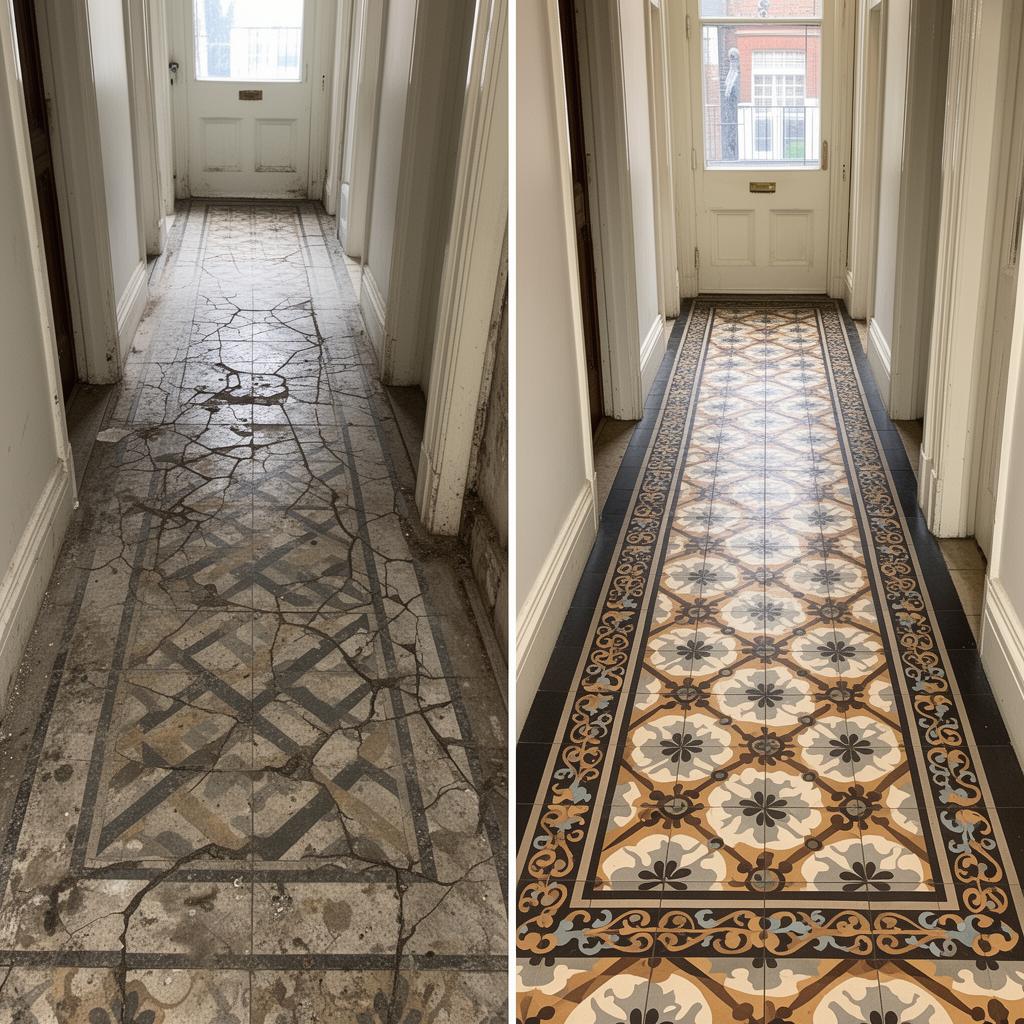
The transformation is always dramatic. Floors that look beyond saving often reveal stunning patterns once the layers of neglect are removed. We regularly uncover original borders, decorative centrepieces, and colour combinations that haven't been seen in decades.
Property owners are consistently astonished by the result. What they assumed was a "ruined old floor" turns out to be a genuine architectural feature that adds both character and significant value to their London home.
Sourcing Replacement Tiles: Quality Matters
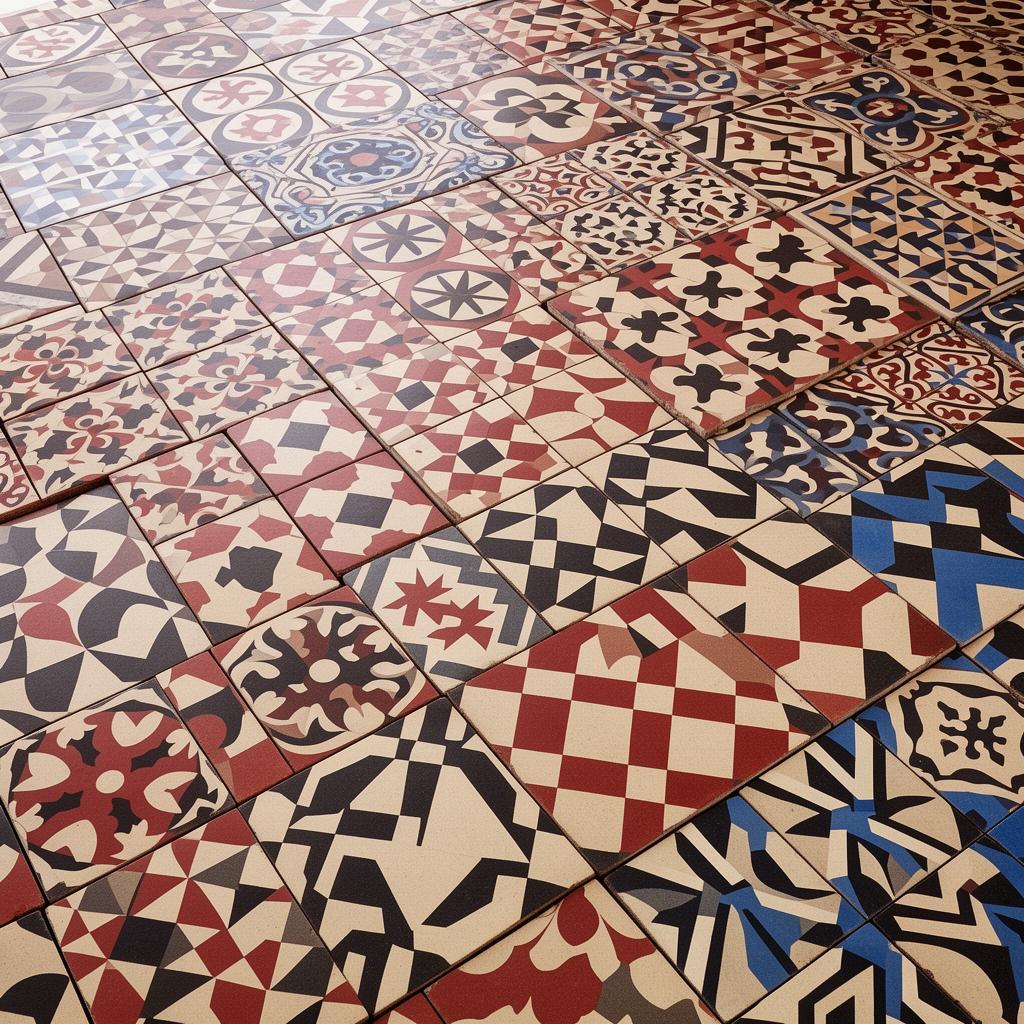
Finding the right replacement tiles is critical. Cheap reproductions stick out immediately — the colours are wrong, the proportions are off, and they wear differently to originals. Here are the suppliers that serious restoration tilers trust:
Original Style
The UK's leading manufacturer of Victorian geometric tiles. Their 'Victorian Floor Tiles' collection faithfully reproduces historic patterns using traditional manufacturing techniques. Excellent colour matching and consistency.
Olde English Tiles
Specialist in encaustic and geometric designs. Their tiles are made to the same thickness and density as period originals, ensuring seamless integration with existing floors.
Architectural salvage yards
For rare Minton, Maw & Co, or Godwin designs, reclaimed tiles are often the only option. London's salvage specialists include LASSCO, Retrouvius, and the Victorian Tile Company.
Victorian Tile Restoration Costs in London
Restoration costs vary enormously depending on the floor's condition, size, and how many tiles need replacing. Here's a realistic guide for 2026:
| Service | Typical Cost |
|---|---|
| Deep cleaning & sealing (per m²) | £40–70 |
| Individual tile replacement (per tile) | £15–35 |
| Full hallway restoration (8–12m²) | £2,500–5,000 |
| Regrouting entire floor (per m²) | £25–45 |
| Sub-floor levelling & repair | £400–1,200 |
| Bespoke tile matching & sourcing | £50–120 per tile |
Compare this to the cost of a new hallway floor — even basic tiles will cost you £1,500+ installed, and you'll lose an irreplaceable piece of your property's history. A professionally restored Victorian floor adds £5,000–15,000 to a London property's value, making it one of the best returns on any home improvement.
Listed Buildings & Conservation Areas
If your London property is listed or within a conservation area, there are additional considerations. Original tile floors are typically covered by the listing, meaning you need consent before making any changes — including well-intentioned "improvements."
A professional restoration that preserves the original floor is almost always the preferred approach from a planning perspective. It's also worth noting that removing or damaging listed features without consent can result in criminal prosecution.
Owning a period property? Protecting your home's character extends beyond the floors. Consider how other heritage features — from sash windows to cornicing — contribute to your property's value and charm.
Why You Need a Specialist (Not Just Any Tiler)
Victorian tile restoration is a niche skill. A brilliant modern tiler may have no experience with encaustic tiles, lime-based mortars, or the specific cleaning chemicals required. The wrong approach can cause irreversible damage:
- ✕Acidic cleaners dissolve limestone-based encaustic tiles
- ✕Pressure washing shatters aged grout joints and dislodges tiles
- ✕Polyurethane sealants trap moisture and cause tiles to spall
- ✕Cement-based grout is too rigid for period floors and cracks
- ✕Machine grinding removes the patina that gives these floors character
A specialist restoration tiler understands these materials intimately. They know which solvents work on which adhesives, how to colour-match grout to 150-year-old originals, and when to leave well enough alone. That expertise is what you're paying for — and it's worth every penny.
Restore Your Property's Original Character
Searching for reliable Victorian tile restoration in London? Our specialist team has restored encaustic and geometric floors across the capital — from Mayfair mansions to Hackney terraces.